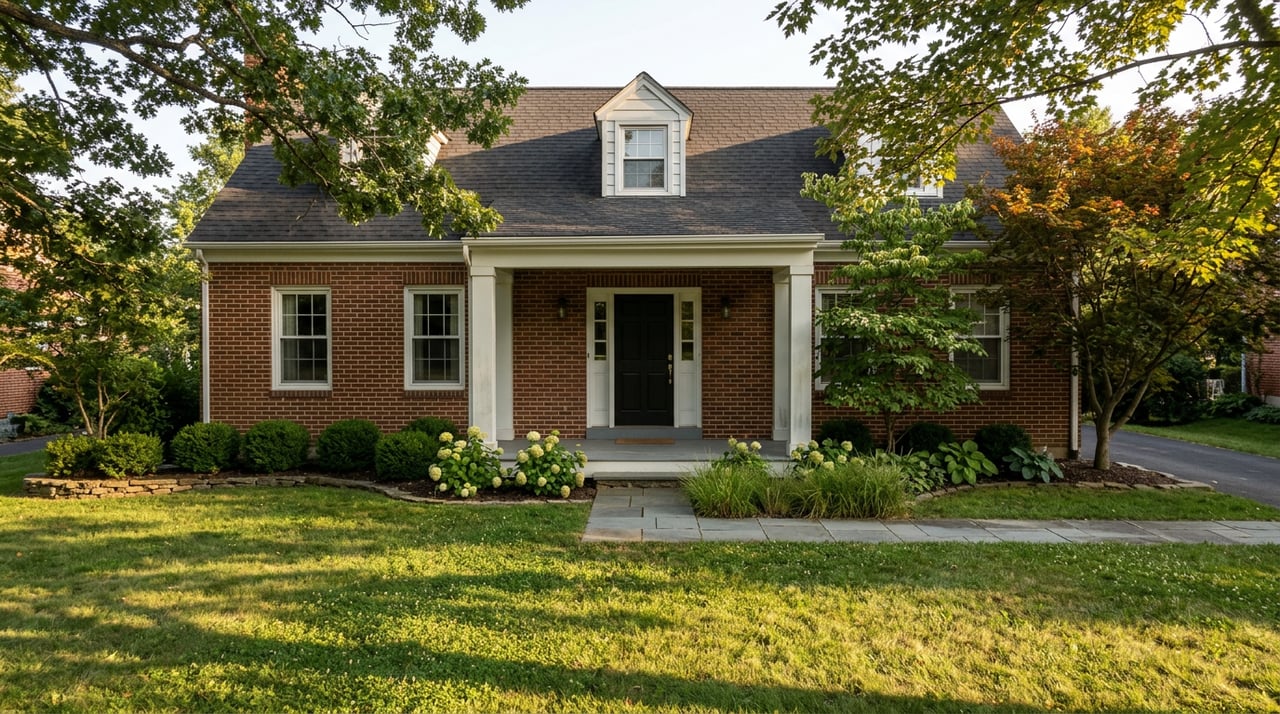
Knob-and-Tube Wiring in Greensburg: Insurance and Inspection Basics
September 17, 2026
September 17, 2026
You walk through a Queen Anne on North Maple Avenue, admire the original woodwork, and make an offer within the week. The home inspection comes back clean enough. The real trouble shows up ten days later in an email from your insurance agent: a conditional binder, not a policy, with a clause requiring an electrician's rewire certification within 30 days of closing. Nobody flagged this at the showing. Nobody mentioned it in the listing. It was always going to happen the moment a lender or underwriter looked past the plaster.
This is the pattern that repeats across Greensburg's oldest neighborhoods, and almost nobody explains it correctly. The home inspector's report is not the document that determines whether your deal closes on schedule. The insurance underwriter's decision is. And that decision runs through a different professional, on a different timeline, using a different standard than the one most buyers assume.
Academy Hill, the neighborhood just north of downtown that made the National Register of Historic Places, is a collection of roughly 250 homes with a design history that stopped filling in new construction around 1930. Local preservation groups date the district's formal designation to 1999, but the architecture itself is older: Queen Anne towers, Folk Victorian rowhouses, and the kind of foursquares and Colonial Revivals that define the streets radiating out from the Westmoreland County Courthouse.
That age profile is exactly what makes knob-and-tube wiring a live issue rather than a historical footnote. The system was standard in American homes from the 1880s through the 1940s, and Greensburg's residential grid, from Academy Hill down through the Shuey Plan and the Hilltop neighborhood, is disproportionately built inside that window. A lot of these houses have been rewired in sections over the decades. Very few have been rewired completely, because doing so means opening plaster walls that nobody wants to touch unless they have to.
A standard home inspection will note knob-and-tube if it's visible in the attic or basement. That note is the beginning of the conversation, not the end of it. Insurers do not accept a general home inspector's observation as proof that a system is safe or that it has been deactivated. What they want is a licensed electrician's evaluation, describing the panel, the amperage, whether any circuits are still live, and whether the visible wiring shows signs of splicing or improper modification.
That distinction matters because it changes who you call and when. If your inspection contingency window closes before you've lined up an electrician's evaluation and talked to your insurance agent about what your specific carrier requires, you can find yourself past the point where you could negotiate a credit or an extension. The smart move, for both buyers and listing agents working an Academy Hill or Hilltop property, is to get the electrician involved during the inspection period itself, not after.
Most standard carriers will not write a new policy on a home with active knob-and-tube wiring. The ones that do generally fall into one of two categories: a conditional binder that requires the wiring gone within a set window, usually 30, 60, or 90 days, or a specialty policy through the surplus lines market at a higher premium. A handful of carriers will insure the system as-is if a licensed electrician certifies it is intact and unmodified, but those carriers tend to charge more across the board to offset the risk.
Once knob-and-tube appears in an inspection report, the conversation usually moves in one of three directions. None of them are wrong. They just carry different costs and different timelines.
| Path | What It Requires | Fits Best When |
|---|---|---|
| Seller completes a rewire before closing | Licensed electrician, permit, inspection, added time on the closing date | Buyer's market, or a property that has already sat on the market |
| Buyer accepts a conditional binder | Rewire completed within 30 to 90 days of closing, proof sent to the carrier | Buyer has financing lined up for the work and a realistic contractor timeline |
| Buyer requests a closing credit | Two written electrician quotes, negotiation with the seller over price | Active wiring runs through most of the house and the panel is also outdated |
A full rewire in a home this age commonly runs somewhere between $8,000 and $20,000, with the spread driven by square footage, number of stories, and whether the walls are plaster or drywall. Plaster adds labor because opening and patching it takes more care than drywall does. A partial rewire targeting only the still-active circuits, leaving already-modernized sections alone, can come in well below that range, though most carriers still require full removal from active service before they'll write a standard policy. Getting two written quotes before you negotiate anything is worth the extra week. The spread between electrician bids on the same house can be larger than people expect.
Pennsylvania's Seller's Property Disclosure Statement asks directly whether you're aware of problems in the electrical system, and LegalClarity says outdated knob-and-tube wiring falls under what you're required to report. There is no way around answering this honestly, and there shouldn't be. The upside is that you get to control the timing.
The sequence that removes the most risk from your sale looks like this: get a licensed electrician's evaluation before you list, not after an offer comes in. If any circuits are still active, get a written estimate for both a full rewire and a partial one targeting only the live sections. Take that documentation to your own insurance agent and ask what a buyer would need to secure coverage on the property as it currently stands. Selling with that packet already assembled turns a scary word on a disclosure form into a known number with a known fix, which is a very different conversation for a buyer to walk into.
Talk to your insurance agent before your inspection contingency closes, not after you've waived it. If your preferred carrier declines the property outright, you need a backup quote in hand while you still have leverage to negotiate. Ask specifically whether the quote you're getting is a standard policy, a conditional binder with a rewire deadline, or a surplus lines policy at a higher rate. Those are three different financial pictures and only one of them is a surprise you want to discover at the closing table.
If you're financing with FHA or VA, build in extra time. The iBuyer guide notes that government-backed loans tend to apply stricter safety standards than conventional financing, and a lender flag on top of an insurer flag can stack delays if you haven't planned for both.
Not every Greensburg neighborhood carries this exposure. Saybrook Village and Evergreen Hill, both built in the 1990s in the city's northern half, and Park Lane, a 20-acre neighborhood developed in 2005 near Seton Hill University, were built to modern electrical code from the start. If knob-and-tube risk is a dealbreaker for you but you still want to be close to downtown, that newer inventory is where you'll find it. If it's the character of Academy Hill or the Hilltop that drew you in, the wiring conversation is simply part of what buying there involves, and it's a solvable one with the right sequence.
Is knob-and-tube wiring illegal in Pennsylvania? No. Inspection Professionals notes that the state has no ban on existing knob-and-tube in homes built before modern code took effect. Your insurance carrier can still apply stricter requirements than the state does.
Does a partial rewire solve the insurance problem? Sometimes. If only a small section of the home still has active knob-and-tube and the rest has already been modernized, a partial rewire targeting just those circuits can satisfy some carriers. Most, however, still require complete removal from active service before issuing a standard policy, so confirm this with your specific insurer before assuming a partial job is enough.
Will this affect a cash sale differently? Insurance still matters even without a lender in the picture, since most buyers want coverage in place at closing regardless of financing. Disclosure still matters, too.
If you're weighing a Victorian on Academy Hill against a newer build near Park Lane, or you're getting ready to list a family home that's had the same wiring since your grandparents' generation, it helps to talk through the specifics before you're inside a contingency deadline. Nikaela Connelly has spent years walking Greensburg buyers and sellers through exactly this kind of local detail. Schedule a free consultation to talk through your specific property before it becomes a surprise on someone else's timeline.
This article is general information, not legal, tax or financial advice. Consult a qualified professional about your situation.
Stay up to date on the latest real estate trends.

Experience dedication, expertise, and a strong commitment to your success.